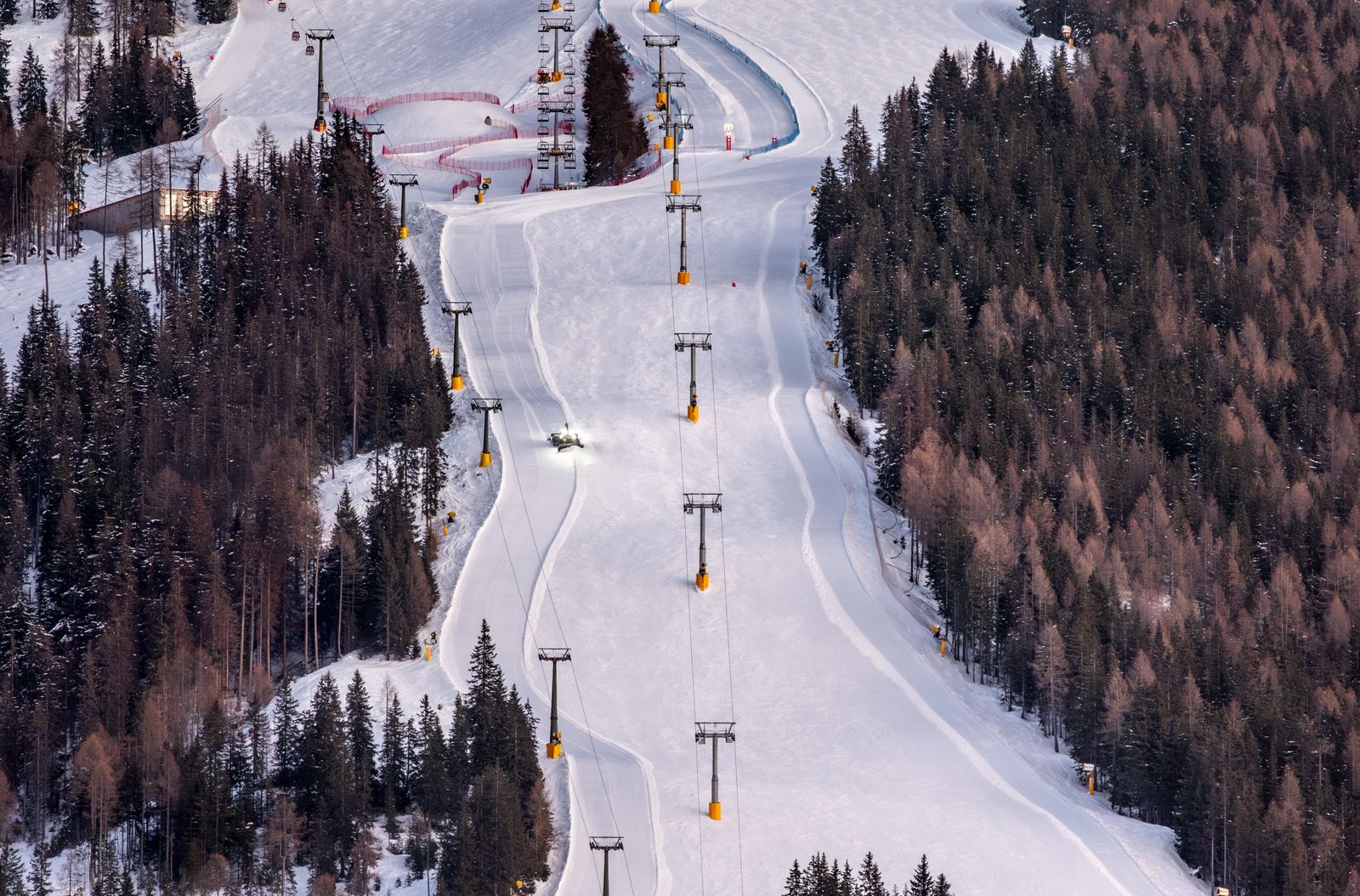
“Ski-in/ski-out” is one of the most valuable phrases in a luxury ski listing, and one of the most loosely used. Here is what it should mean, the variations you will see, and the questions worth asking before you book.
What ski-in/ski-out actually means
In its true sense, ski-in/ski-out means you can ski from the piste to your door at the end of the day and clip in outside in the morning, without a bus, taxi or long walk in ski boots. Skis and boots stay in a boot room, and your first run starts the moment you step outside.
For a luxury trip, that convenience is worth a great deal: more time on the snow, easy lunches back at the chalet, and no hauling equipment through a busy village with children in tow.
The variations you will see in listings
- Ski-in/ski-out: a piste or ski track runs to the property in both directions.
- Ski-in only (or ski-out only): you can ski home but need a short walk or lift to get back on the slopes, or vice versa.
- Piste-side or “on the slopes”: the property is next to a piste, but you may need to walk a short distance to reach it.
- Snow permitting: the route home relies on a lower run that is only open when snow cover allows, common at lower altitudes and late in the season.
- Near the lifts: walking distance to a lift, not ski-in/ski-out at all.
Questions to ask before you book
- Which named piste or ski track reaches the property, and what is its grade? A ski home on a red run is not ideal for nervous skiers.
- Is the route open all season, or does it depend on snow cover lower down?
- How far is the nearest lift, and what time does it start and stop running?
- Is there a heated boot room, and is ski storage or a ski valet service included?
- How do you reach the village in the evening: on foot, by shuttle or by taxi?
Always check the official piste map yourself. Resort piste maps are published by the lift companies, and comparing the property’s location with the marked runs takes a couple of minutes.
Where ski-in/ski-out is most common
Purpose-built and high-altitude resorts, where accommodation was planned around the pistes, tend to offer the most genuine ski-in/ski-out options: the French resorts of Les 3 Vallées are a well-known example. In Austria, Lech Zürs notes that many of its accommodations sit right on the slopes. Traditional valley villages are different: in car-free Zermatt, many guests walk or use the village’s electric taxis to reach the lifts, so location within the village matters more than labels.
In North America, resorts such as Whistler Blackcomb and Aspen Snowmass have slope-side lodging around their bases, but layouts vary widely, so check how each property connects to the lifts.
Is it worth paying more for?
For families, mixed-ability groups and anyone who values a long lunch at home, genuine ski-in/ski-out is usually one of the most useful upgrades you can make. Confident skiers happy to ride a lift into the village may prefer a central location close to restaurants and après. Our Places to stay guide compares staffed chalets, palace hotels and ski-and-spa retreats, and Where to go covers the resorts themselves.
Frequently asked questions
What is the difference between ski-in/ski-out and piste-side?
True ski-in/ski-out means a piste or ski track reaches the property in both directions, so you can ski to the door and clip in outside. Piste-side, or “on the slopes”, means the property is next to a piste, but you may need to walk a short distance to reach it.
What does “snow permitting” mean in a ski-in/ski-out listing?
It means the route home relies on a lower run that is only open when snow cover allows. This is most common at lower altitudes and late in the season, so ask whether the route is normally open all winter.
How can I check whether a property is genuinely ski-in/ski-out?
Ask which named piste or ski track reaches the property and what its grade is, then compare the location with the official piste map published by the lift company. It takes a couple of minutes and shows exactly how the property connects to the lifts.
Is Zermatt a ski-in/ski-out resort?
Zermatt is a traditional, car-free valley village rather than a purpose-built resort. Many guests walk or use the village’s electric taxis to reach the lifts, so where you stay within the village matters more than any ski-in/ski-out label.
Which resorts have the most ski-in/ski-out accommodation?
Purpose-built and high-altitude resorts, where accommodation was planned around the pistes, tend to offer the most genuine options: the French resorts of Les 3 Vallées are a well-known example. In Austria, Lech Zürs notes that many of its accommodations sit right on the slopes.
Is ski-in/ski-out worth it for families and beginners?
Often, yes: it saves carrying equipment through the village and makes lunches back at the chalet easy. Check the grade of the run home first, though: a ski home on a red run is not ideal for nervous skiers or young children.
Luxury Ski Breaks is independent editorial content. We are not a tour operator or travel agent, we do not take bookings and we are not affiliated with any resort, hotel, chalet company or lift operator mentioned. Facts come from official resort, tourism and health sources and can change by season. Always confirm details before you travel. Photos are Pexels stock images used as examples.