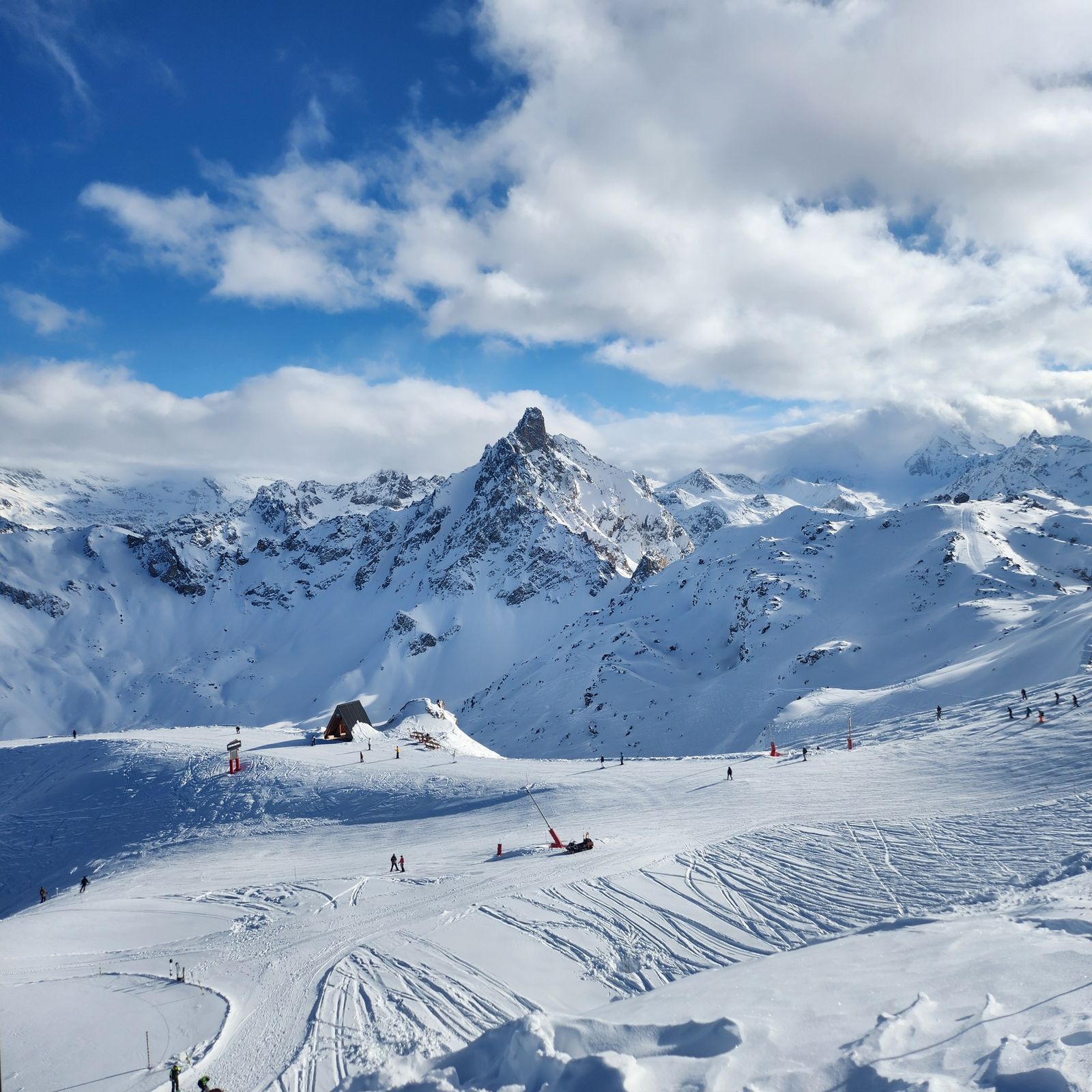
The right resort shapes everything about a luxury ski holiday: the size of the ski area, how reliable the snow is, how far you travel and what happens after the lifts close. Here is how the Alps and North America compare, using the resorts’ own published facts.
Start with how you like to ski
Before comparing glossy brochures, be honest about your group. Do you want to cover big distances on skis, or ski a few long morning runs and linger over lunch? Are there beginners, children or confident off-piste skiers? The answers point you towards very different mountains, and our Where to go guide sets out each resort’s strengths side by side.
Scale: linked ski areas versus big single resorts
The Alps are famous for vast linked ski areas where one pass connects several villages:
- Les 3 Vallées, France: 600 km of linked slopes across seven resorts, including Courchevel, Méribel and Val Thorens.
- Ski Arlberg, Austria: 301 km of slopes and 85 lifts and cable cars linking St. Anton, Lech Zürs and Warth-Schröcken; Ski Arlberg describes it as Austria’s largest ski resort.
- Dolomiti Superski, Italy: more than 1,200 km of slopes in 12 ski areas on one ski pass, including Cortina d’Ampezzo’s own 120 km.
- Verbier and the 4 Vallées, Switzerland: 410 km of pistes with a top lift at Mont Fort, 3,330 m.
North American resorts measure terrain in acres rather than piste kilometres, and the experience is different: one large, well-groomed resort rather than a journey between villages. Whistler Blackcomb in British Columbia lists 8,171 acres, more than 200 marked runs, 16 alpine bowls and three glaciers, and calls itself the largest ski resort in North America. Aspen Snowmass in Colorado offers four separate mountains on one lift ticket.
Altitude and snow reliability
Height matters for snow quality, especially early and late in the season. Val Thorens, in Les 3 Vallées, sits at 2,300 m and describes itself as Europe’s highest ski resort, while the Matterhorn Glacier Paradise above Zermatt is Europe’s highest cable-car station at 3,883 m. In Austria, Lech sits at 1,450 m, but the Arlberg is one of the snowiest regions of the Alps. Lech Zürs says the area averages around nine metres of fresh snow a season.
Across the Atlantic, Whistler Blackcomb reports average snowfall of more than ten metres a year, and Aspen Snowmass’s Snowmass summit reaches 3,813 m (12,510 ft). If you are travelling in early December or April, prioritise high or glacier terrain wherever you go.
Piste grades are not the same everywhere
European resorts grade runs green (mainly in France), blue, red and black. North America uses green circles, blue squares and black diamonds. Grades are relative to each resort, so a red in one valley can feel like a black in another. Mixed-ability groups should look for resorts with plenty of gentle terrain near the village. Aspen’s Buttermilk, for example, is 35% beginner terrain according to Aspen Snowmass.
Village character, dining and après
Alpine resorts tend to win on atmosphere and mountain dining: car-free Zermatt beneath the Matterhorn, St Moritz with its frozen-lake events, or Cortina d’Ampezzo in the UNESCO-listed Dolomites, co-host of the Milano Cortina 2026 Winter Olympics. North American resorts tend to win on consistency: wide groomed runs, efficient lift systems and a strong service culture. Browse our What to do guide for spa, dining and après ideas.
Getting there
From the UK, the Alps are a short flight plus a road or rail transfer, which makes a long weekend realistic. North America is a long-haul trip that is easier to justify for a week or more: Tourism Whistler, for example, puts Whistler about two hours’ drive from downtown Vancouver. Factor transfer time into your choice, and see Places to stay for how location within a resort affects your days.
Quick guide: which suits you?
- Mileage and variety: Les 3 Vallées, Ski Arlberg or the Dolomiti Superski area.
- Scenery and a car-free village: Zermatt.
- Off-piste and freeride culture: Verbier or the Arlberg (with a qualified guide).
- Glamour and history: St Moritz or Cortina d’Ampezzo.
- Big-mountain North American skiing: Whistler Blackcomb or Aspen Snowmass.
Frequently asked questions
Which is the largest linked ski area in the Alps?
Les 3 Vallées in France describes itself as the world’s largest interconnected ski area, with 600 km of slopes across seven resorts including Courchevel, Méribel and Val Thorens. Dolomiti Superski in Italy covers more than 1,200 km, but across 12 ski areas sharing one pass rather than a single linked network.
Which luxury ski resorts are the most snow-sure?
Altitude is the best guide. Val Thorens sits at 2,300 m, Verbier’s top lift at Mont Fort reaches 3,330 m and the Matterhorn Glacier Paradise above Zermatt is 3,883 m. For early December or April trips, choose resorts with high or glacier terrain.
How does Whistler Blackcomb compare in size with the big Alpine ski areas?
North American resorts measure terrain in acres rather than piste kilometres, so the figures are not directly comparable. Whistler Blackcomb lists 8,171 acres, more than 200 marked runs, 16 alpine bowls and three glaciers, and calls itself the largest ski resort in North America.
Is Aspen Snowmass a good choice for a mixed-ability group?
Yes. Aspen Snowmass offers four separate mountains on one lift ticket, so stronger skiers and beginners can each find suitable terrain. Buttermilk is 35% beginner terrain according to Aspen Snowmass’s official statistics.
Is a red run the same difficulty in every resort?
No. European resorts grade runs green (mainly in France), blue, red and black, and North America uses green circles, blue squares and black diamonds. Grades are relative to each resort, so a red in one valley can feel like a black in another.
Is the Alps or North America better for a short ski break from the UK?
For a long weekend, the Alps are usually more practical: a short flight plus a road or rail transfer. North America is a long-haul trip that is easier to justify for a week or more. Tourism Whistler, for example, puts Whistler about two hours’ drive from downtown Vancouver.
Luxury Ski Breaks is independent editorial content. We are not a tour operator or travel agent, we do not take bookings and we are not affiliated with any resort, hotel, chalet company or lift operator mentioned. Facts come from official resort, tourism and health sources and can change by season. Always confirm details before you travel. Photos are Pexels stock images used as examples.